

Providing authentic answers to questions about the resurrection of Jesus and the historical reliability of the Gospels
-
Mike Licona was instrumental in my journey out of Islam to Christ. While I was a Muslim college student, Mike invited me to his home regularly to discuss the historicity of Jesus’ death on the cross and his resurrection from the dead. The evidence Mike presented was so compelling it formed the keystone of my conversion. Since then, I have seen his work so powerfully impact thousands with historical evidence of the Christian faith that I have financially supported his ministry for years. I whole-heartedly encourage you to also support Mike and his ministry, that others may come to know the truth of Jesus not only in their hearts, but also in their minds.
Author, Seeking Allah, Finding Jesus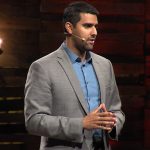
-
I often tell my students, ‘You must pursue truth rather than protect your presuppositions.’ This is axiomatic for honest investigation, a sine qua non of historical research. Sadly, it is a rare commodity among scholars today, even among biblical scholars. Dr. Licona is one who exemplifies this approach in his treatment of the resurrection of Jesus. Frankly, I can’t remember when I came across a scholar whose passion for Christ so readily translates into a passion for truth. Licona is the man!
Senior Professor of New Testament Studies, Dallas Theological Seminary, Executive Director, Center for the Study of New Testament Manuscripts
-
Mike Licona is simply a wonderful communicator. Never speaking over the heads of his various audiences, he employs humor and overall winsomeness to grab his audience’s attention and to keep it riveted on the subject at hand. Throughout, Mike’s greatest assets come across well–his own personality along with his scholarship. As one listens, it is obvious that behind the excellent eye contact, humor, and clear outline is a scholar with whom skeptics ought not try to spar.
Distinguished Professor of Philosophy & Apologetics Liberty University
Thought Provoking Debates
Mike Licona vs. Bart Ehrman
Can historians prove Jesus rose from the dead?
2009, Southern Evangelical Seminary in Matthews, NC
2009, Southern Evangelical Seminary in Matthews, NC
Mike Licona vs. Shabir Ally
Did Jesus rise from the dead?
2004, Regent University in Virginia Beach
2004, Regent University in Virginia Beach
Mike Licona vs Dale Martin
Did Jesus Believe He Was Divine?
October 2012, Acadia Divinity College in Nova Scotia, Canada
October 2012, Acadia Divinity College in Nova Scotia, Canada